

If you’ve ordered dermal fillers in the UK over the past few years, you’ve probably noticed the paperwork has got more complicated, not less. CE marking, UKCA marking, Responsible Persons, MHRA registration numbers. It’s a lot of acronyms for something that used to be a fairly simple purchasing decision.
This isn’t just red tape for its own sake. Dermal fillers with a medical purpose are regulated as medical devices in the UK, and the marks and registrations behind a product exist to show it’s been assessed for safety and performance. But the UK’s regulatory landscape has been in a genuine state of transition since Brexit, and it’s still moving. This article walks through what CE and UKCA marking actually mean, what’s currently required, what’s changing, and what you should be checking before you place an order, in plain language, without overstating how settled any of it is.
A Quick Health Warning Before We Start
UK medical device regulation has changed more than once in the past few years, and further changes are expected. Deadlines have been set and then postponed. Government has tabled new legislative powers as recently as September 2026 that could reshape how aesthetic products like dermal fillers are regulated in future. This article reflects the general picture as understood at the time of writing, but it is not a substitute for checking the current position on gov.uk and the MHRA’s own guidance, particularly given how frequently this area is updated. When in doubt, go to the primary source.
Are Dermal Fillers Actually Regulated as Medical Devices in the UK?
The honest answer is: it depends on how the product is marketed, and this is one of the more confusing parts of current UK regulation.
- Dermal fillers marketed with a medical purpose have been classed as medical devices in the UK since May 2020, and require a valid CE or UKCA mark to be placed on the market.
- Dermal fillers marketed purely for aesthetic or cosmetic purposes, where the manufacturer makes no medical claim, currently fall outside the formal medical device framework. The MHRA itself has described this as a gap in the law.
The MHRA has been consulting on closing this gap for several years, and the direction of travel is clear: official consultation outcomes state the intention to bring all dermal fillers into scope of UK medical device regulation, regardless of how they’re marketed, because of their risk profile. In September 2026, the government tabled amendments to the Health Bill that would create the legislative powers for a future MHRA licensing regime covering medical devices in Great Britain. It’s worth being clear about what this does and doesn’t mean: these amendments provide enabling powers for a future regime, they don’t themselves introduce a new licensing requirement for aesthetic practitioners today, and any operational licensing scheme would still need considerable further development.
What this means in practice: don’t assume a filler is unregulated just because it’s sold as “aesthetic only.” The regulatory net is tightening, and products that currently sit in the grey area may not stay there. Choosing suppliers and products that already meet medical device standards, even where not strictly required yet, is the more future-proof approach.
CE Marking: What It Actually Tells You
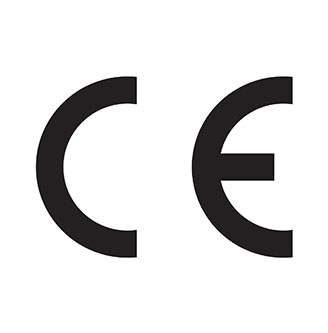
CE marking (Conformité Européenne) indicates a product has been assessed against relevant EU safety, health and performance requirements. For dermal fillers, this means assessment under EU medical device legislation, either the older Medical Device Directive (MDD) or the newer Medical Device Regulation (MDR 2017/745), which classifies dermal fillers as higher-risk devices requiring more rigorous scrutiny.
A few things worth knowing:
- CE marking under the MDD stopped being issued in the UK context some time ago, and MDD/AIMDD CE marking has not been recognised since 26 May 2024.
- CE marking issued under the newer MDR framework is a different matter, and current UK transitional arrangements allow CE-marked devices (MDR-certified) to continue being placed on the Great Britain market for a period, generally understood to run to 2028 or until the relevant certificate expires, whichever is sooner.
- A CE mark on its own doesn’t tell you which framework it was issued under, or whether that basis is still valid for the GB market. That’s something you need to check specifically, not assume.
UKCA Marking: The UK’s Own System
After Brexit, the UK introduced UKCA (UK Conformity Assessed) marking as its own equivalent to CE marking for the Great Britain market (England, Scotland and Wales). It shows a device meets the requirements of the UK Medical Devices Regulations 2002, as amended.
Key points for practitioners:
- UKCA applies only to Great Britain. It is not required, and is not recognised, in Northern Ireland, which continues to require CE marking under EU rules.
- The original deadline for mandatory UKCA marking (1 July 2023) was postponed. Current transitional arrangements allow continued use of CE-marked devices for a period, so the market currently has a mix of CE and UKCA marked products, both potentially valid depending on the specific framework and dates involved.
- Whether UKCA will remain necessary alongside an extended CE acceptance window is, by the industry’s own account, still being actively debated as the MHRA develops its longer-term “future medical devices regime.” Expect this to keep evolving.
The UK Responsible Person: Why It Matters
If the manufacturer of a medical device is based outside the UK, which applies to a great many filler brands, someone must be designated as the UK Responsible Person (UKRP). The UKRP is the legal entity responsible for registering the device with the MHRA, confirming it meets UK requirements, and taking legal responsibility for compliance issues on the UK market.
When you’re assessing a supplier or brand, this is a genuinely practical thing to check:
- Who is the UK Responsible Person for this product?
- Are they named on the packaging or documentation, as required?
- Is the device actually registered with the MHRA, with a verifiable registration?
A product without a clearly identifiable UKRP, where one is required, is a red flag worth investigating further before ordering.
A Practical Checklist Before You Order
This isn’t exhaustive, and it isn’t legal advice, but it’s a reasonable starting point for due diligence:
- Ask directly: “Does this product hold CE marking under MDD or MDR, or UKCA marking, or both?” A supplier who can’t answer clearly is itself informative.
- Check the device classification. Dermal fillers are typically treated as higher-risk devices (commonly discussed as Class III), which carry more rigorous conformity assessment than simpler Class I devices. Confirm the classification claimed matches what you’d expect for the product type.
- Identify the UK Responsible Person for non-UK manufacturers, and verify they’re genuinely registered, not just named on paper.
- Check MHRA registration for the device itself, where applicable and verifiable.
- Confirm which market the marking covers. CE alone does not necessarily satisfy Northern Ireland and Great Britain requirements in the same way, so if you supply or treat across both, check this specifically.
- Ask for batch-level traceability documentation, not just a general claim of compliance. Genuine, properly documented products should have this readily available.
- Keep records of what you checked and when. Regulatory positions are moving; a product that’s compliant today should be periodically rechecked, particularly around any announced transition dates.
- Be wary of unusually cheap or unfamiliar sources. Counterfeit and non-compliant fillers remain a known problem in the UK market, and a too-good-to-be-true price is a reasonable prompt to look more closely at documentation.
Why This Matters Beyond “Ticking a Box”
It’s tempting to treat CE/UKCA marking as pure paperwork, something to file away rather than genuinely scrutinise. But there’s a real safety rationale underneath it:
- Conformity assessment is meant to demonstrate safety and performance data exists for the specific product, not just the general category.
- Traceability matters if something goes wrong. Proper registration and marking make it possible to trace batches, report incidents, and support any investigation, protecting both patients and practitioners.
- Insurance and professional standing can depend on it. Using unregistered or non-compliant products may affect your professional indemnity cover or standing with regulators, separate from the product safety question itself.
- The regulatory direction is toward more scrutiny, not less, for aesthetic fillers specifically. Building supplier relationships now around verifiably compliant products is a sensible hedge against future tightening.
What This Doesn’t Tell You
It’s worth being balanced here: a valid CE or UKCA mark is a meaningful signal, but it isn’t a guarantee of clinical superiority, and it isn’t a substitute for your own clinical judgement. Marking relates to conformity with safety and performance requirements as assessed, not to how a product compares with competitors, nor to whether it’s the right choice for a specific patient or technique. Two CE-marked fillers can perform quite differently in practice. Regulatory compliance is the baseline, not the whole picture.
Frequently Asked Questions
Do all dermal fillers sold in the UK need a CE or UKCA mark?
Currently, fillers marketed with a medical purpose require one. Fillers marketed purely for aesthetic purposes sit in a regulatory grey area that the MHRA has signalled an intention to close, so this is worth monitoring rather than treating as settled.
Can I still use CE-marked products, or do I need UKCA now?
As things currently stand, CE-marked devices (under the relevant MDR framework) can generally still be placed on the Great Britain market under transitional arrangements, alongside UKCA-marked devices. Given how often this has shifted, check the current position before assuming either is sufficient long-term.
Is UKCA valid in Northern Ireland?
No. Northern Ireland requires CE marking under EU rules and does not recognise UKCA marking.
What’s a UK Responsible Person, and why should I care?
It’s the UK-based entity legally responsible for a non-UK manufacturer’s device on the UK market, including MHRA registration and compliance. Checking this exists and is genuine is a reasonable part of supplier due diligence.
Is this likely to change again?
Very possibly. The MHRA has been developing a “future medical devices regime” for several years, and recent legislative moves (September 2026) suggest further change, potentially including a licensing regime for medical devices, is still ahead. Build in a habit of periodic rechecking rather than treating any current position as permanent.
Final Thoughts
The UK’s regulatory framework for dermal fillers is a genuine moving target, shaped by Brexit, several rounds of MHRA consultation, and legislation that’s still being developed. For practitioners and clinics, the practical takeaway isn’t to memorise every deadline, since they keep shifting, but to build supplier vetting habits that hold up regardless of which mark happens to be current: ask direct questions, check documentation rather than assuming it exists, verify the UK Responsible Person where relevant, and keep records of what you checked and when.
Treating this as basic due diligence, rather than paperwork to get past, is what will serve you best as the regulatory picture continues to firm up.
Disclaimer: This article is for general information for qualified practitioners and isn’t legal or regulatory advice. UK medical device regulation is under active development; always verify current requirements directly via gov.uk and the MHRA before making ordering or compliance decisions.