

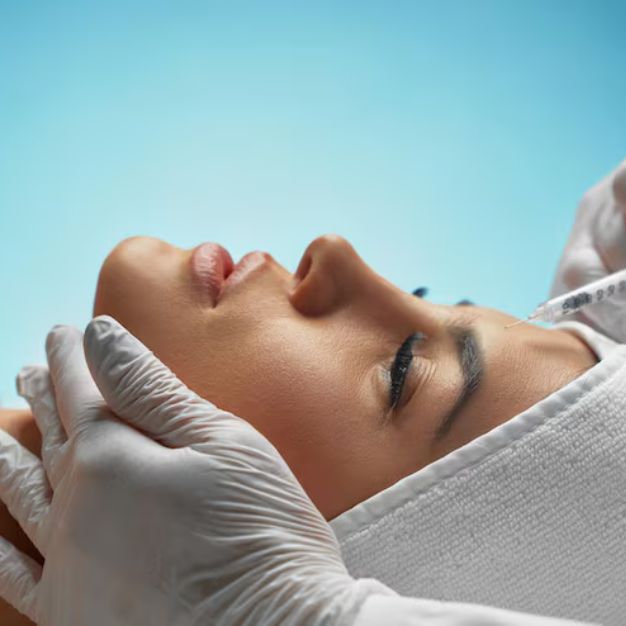
Every January, someone in the aesthetics world declares “this is the year of X.” Most of the time it’s a mild exaggeration. This year feels a little different. Walk into almost any UK clinic in 2026 and you’ll hear the same conversations happening on repeat: patients asking for skin that looks healthier, not just fuller; practitioners rethinking their treatment menus around regeneration rather than volume; and suppliers scrambling to keep certain product lines in stock because demand has outpaced anyone’s forecast.
So what’s actually driving the industry this year, and what does it mean if you’re running a clinic or building out your treatment offering? Here are the five trends we think matter most for 2026 — presented as fairly as we can, including where the evidence is strong and where it’s still more buzz than data.
1. Regenerative Medicine Overtakes “Volume for Volume’s Sake”
If there’s one storyline that ties the whole year together, it’s this: the shift away from hyaluronic acid fillers used purely to add volume, and towards treatments that get the skin to do more of the work itself.
Polynucleotides are the clearest example. These are injectable bio-stimulators, typically derived from purified salmon DNA fragments, that don’t fill anything — instead, they signal fibroblasts to ramp up their own collagen and elastin production. Search interest in polynucleotides has grown sharply over the past two years, and several UK trend reports now place them just behind Profhilo as the most-searched non-surgical treatment in the country. They’ve become particularly popular for areas that fillers handle poorly, like under-eye hollows and crepey neck skin, precisely because they improve tissue quality rather than adding bulk in a spot where bulk isn’t wanted.
It’s worth being balanced here: this doesn’t mean fillers are going away. Practitioners we speak to are still doing plenty of HA work — it’s just increasingly positioned as a second step, used for specific structural concerns after the skin quality groundwork has been laid, rather than the default opening move. And regenerative treatments are not without their caveats: results build gradually over weeks or months rather than instantly, which means managing patient expectations is now as important as the injection technique itself.
What it means for stock: expect continued demand growth across polynucleotide and biostimulator lines, alongside steady (not declining) demand for core dermal filler ranges used for targeted volumisation.
2. “Skin Quality First” Protocols and Treatment Stacking
Related to the point above, but distinct enough to call out on its own: 2026 has seen a real shift in how treatment plans are built. Instead of a patient booking a single filler appointment, more clinics are structuring care as a staged pathway — skin boosters or polynucleotides first, energy-based or resurfacing treatments alongside, and injectables layered in later for specific concerns.
Some in the industry have started calling this “treatment stacking,” where a practitioner combines several modalities with the same end goal but different mechanisms, on the theory that layered, complementary treatments outperform any single one used alone. A brow lift achieved by pairing a lifting device with neuromodulator injections is a commonly cited example.
This is genuinely a mixed bag depending on who you ask. Combination protocols can deliver more natural, longer-lasting results, and there’s a commercial upside too — practices offering staged packages report meaningfully higher revenue per patient than those selling treatments individually. On the other hand, more steps mean more cost and more appointments for the patient, and not every case needs it. The trend is real, but “more is always better” isn’t a universally accepted view in the industry, and plenty of experienced practitioners remain cautious about over-treating.
What it means for stock: clinics building multi-step protocols will want reliable access to complementary categories at once — skin boosters, polynucleotides, and needles or cannulas suited to different treatment depths — rather than sourcing one product line at a time.
3. AI-Assisted Diagnostics and Personalisation
This one has moved from “interesting pilot project” to genuinely mainstream fairly quickly. AI-powered skin analysis tools — the kind that scan below the surface to estimate sun damage, vascularity, and collagen density — are increasingly showing up in consultation rooms, not just in marketing brochures.
The pitch is straightforward: instead of a practitioner eyeballing a face and applying a fairly standard protocol, the scan produces objective data that feeds into a more tailored plan. Supporters argue this reduces guesswork and helps set realistic expectations with patients up front. It’s worth noting, though, that the evidence base for how much these tools actually change clinical outcomes (versus simply improving the consultation experience and conversion rate) is still developing — a lot of the enthusiasm right now is coming from technology vendors and early-adopter clinics rather than independent long-term studies.
Either way, patient expectations are shifting. Aesthetic consumers in 2026 are more likely to arrive at a consultation already having researched their options online, and a data-backed explanation of “why this treatment, for you specifically” is becoming something patients actively look for, not just a nice-to-have.
What it means for practice: this trend affects consultation workflow more than product selection directly, but it does reinforce demand for treatments that can be genuinely personalised in dosage and placement — which favours flexible product ranges over one-size-fits-all kits.
4. GLP-1 Facial Volume Loss (“Ozempic Face”)
With the number of people on GLP-1 weight-loss medications continuing to climb, clinics are seeing a knock-on effect that’s specific to this decade: rapid weight loss is leaving patients with hollowed cheeks, sagging along the jawline, and a general loss of facial fullness that reads as older than their actual age.
This has created real, sustained demand for mid-face volumisation — dermal fillers placed specifically to restore structure rather than to plump features — often combined with PDO thread repositioning for patients dealing with laxity as well as volume loss. Practitioners with strong skills in this specific combination are reportedly in high demand, and it’s become enough of a distinct category that some clinics now market “GLP-1 facial rejuvenation” as its own service line.
The caveat worth flagging: this is a genuinely new patient population with its own considerations — skin laxity patterns after rapid weight loss aren’t identical to age-related volume loss, and treatment approaches are still being refined as more data comes in. It’s an area to watch rather than a fully settled protocol.
What it means for stock: steady-to-growing demand for structural, higher-lift dermal filler products and thread systems, particularly for mid-face and jawline use.
5. Tighter Regulation and a Renewed Focus on Safety
Not every 2026 trend is about a new product — some of the most consequential shifts are regulatory. In the UK specifically, there’s been sustained pressure to bring higher-risk procedures, such as liquid BBLs and other non-surgical body treatments, under stricter oversight, with campaigners pushing for these to be restricted to regulated healthcare professionals only. Government consultation on tightening the rules has been flagged as a 2026 development following a multi-year campaign from patient safety groups.
This matters beyond the compliance box-ticking. As treatments become more medical in nature — regenerative injectables being a good example — the margin for error in untrained hands grows, and the industry conversation has noticeably shifted towards accountability, training, and documentation. For clinics and suppliers alike, that means provenance, batch traceability, and working with properly regulated sources aren’t just good practice; they’re increasingly what patients and regulators expect as standard.
It’s a trend without much controversy attached — virtually no one in the industry is arguing against better safety standards — but there’s real debate about implementation: how fast change should happen, how it affects smaller independent practitioners, and where exactly the lines of “high risk” should be drawn.
The Bigger Picture
If you zoom out, 2026 isn’t really about one flashy new treatment. It’s about a mindset shift: patients thinking in terms of skin health and longevity rather than one-off fixes, practitioners building layered and increasingly personalised treatment plans, and the industry as a whole growing up around questions of safety and evidence. None of these trends exist in isolation — regenerative treatments feed into stacking protocols, which are informed by AI diagnostics, all happening against a backdrop of tighter regulatory scrutiny.
Whether all five hold their momentum through the rest of the year remains to be seen — trend pieces are, by nature, snapshots rather than certainties. But for clinics thinking about where to focus training, stock, and patient conversations in the months ahead, these are the five threads worth paying attention to.
This article is intended as general industry commentary for aesthetic practitioners and does not constitute clinical or treatment advice. Always refer to product-specific guidance and current UK regulatory requirements before incorporating new treatments into practice.